
Data Governance That Unlocks Trust, Quality and Growth
Data governance is not simply a compliance exercise. It is the operating discipline that makes data accurate, secure, understandable and useful across the organisation.
This guide explains how UK business leaders can create practical governance that improves decision-making, reduces operational risk and gives teams confidence in the information they use every day.
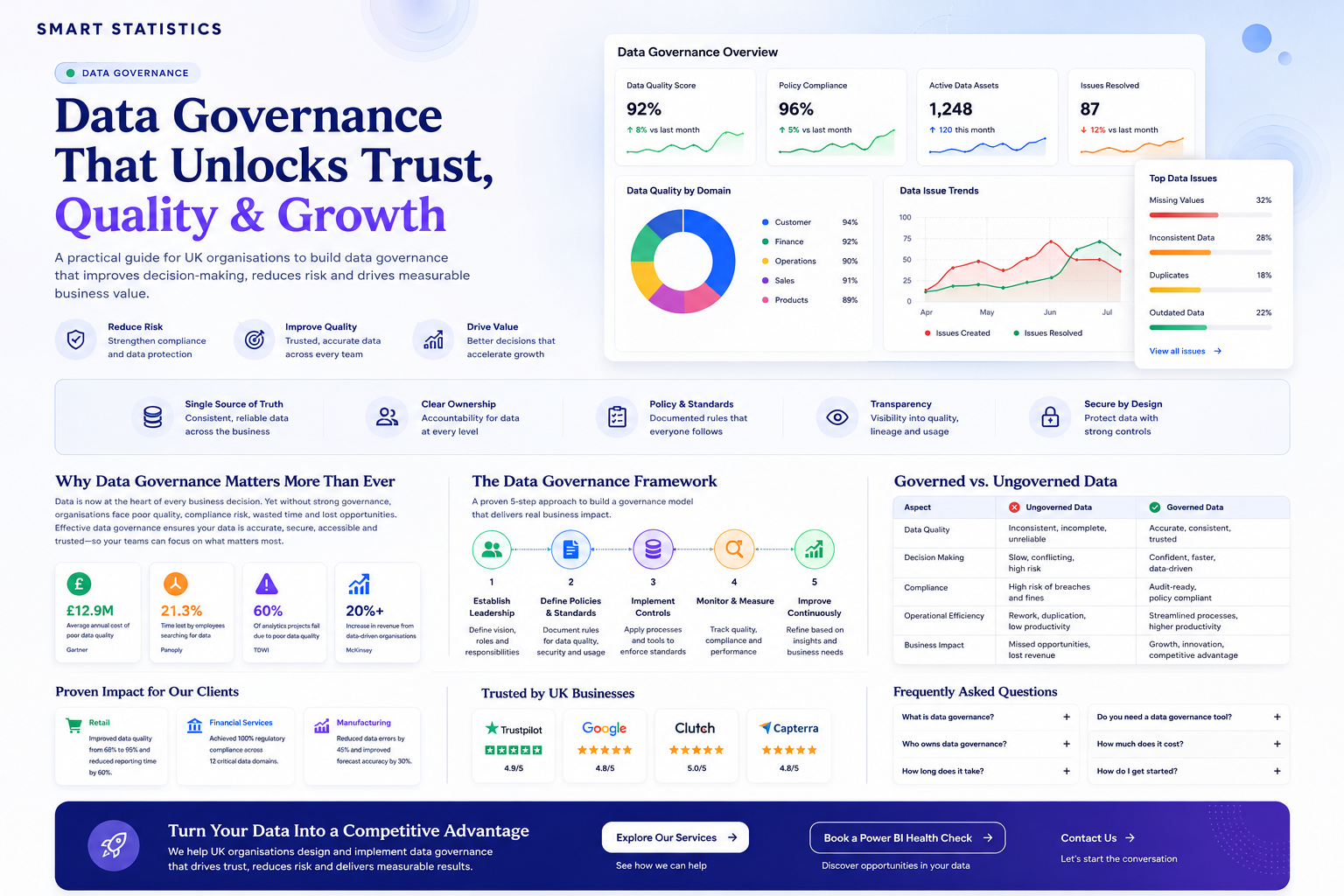
Data Quality by Domain
Data Issue Trends
The Foundations of Trusted Business Data
Effective governance ensures that data is consistent, understandable, protected and owned. It creates the conditions for reliable reporting, responsible AI and better business decisions.
Single Source of Truth
Consistent definitions and governed data models reduce conflicting reports, duplicated calculations and avoidable debate about which number is correct.
Clear Ownership
Named owners and stewards create accountability for quality, definitions, access, issue resolution and the appropriate use of important data.
Policies and Standards
Documented standards ensure that teams handle data consistently across systems, dashboards, spreadsheets and operational processes.
Transparency
Lineage, definitions and quality indicators help users understand where data came from, how it was transformed and whether it is reliable.
Secure by Design
Appropriate controls protect sensitive information while ensuring authorised users can access the data required to perform their roles effectively.
Five Steps to Build Practical Data Governance
Governance should be proportionate to the organisation. Start with the most important data and decisions, then expand the model as ownership, processes and capability mature.
Establish Leadership
Define the sponsor, owners, stewards and decision-making responsibilities.
Define Standards
Document rules for definitions, quality, security, retention and usage.
Implement Controls
Apply practical checks, permissions, workflows and approval processes.
Monitor and Measure
Track quality, compliance, adoption, incidents and remediation performance.
Improve Continuously
Refine governance using business feedback, risk evidence and quality trends.
What Good Governance Changes in Practice
Governance creates a visible difference in data quality, compliance, operational efficiency and the confidence leaders place in reporting.
| Area | Ungoverned Data | Governed Data |
|---|---|---|
| Data Quality | Inconsistent, incomplete and difficult to reconcile | Accurate, monitored and supported by clear ownership |
| Decision-Making | Slow, conflicting and dependent on manual validation | Faster, trusted and based on shared definitions |
| Compliance | High risk of inappropriate access, retention issues or breaches | Documented controls, auditability and policy alignment |
| Operational Efficiency | Repeated cleansing, reconciliation and duplicated effort | Reusable data assets, fewer corrections and clearer processes |
| Business Value | Missed opportunities and limited confidence in analytics | Better insight, scalable reporting and stronger innovation |
The Value of Trusted and Governed Data
The objective is not governance for its own sake. It is to reduce risk, improve performance and create confidence in the information used across the business.
Less Rework
Reduce manual cleansing, reconciliation and repeated corrections.
Lower Risk
Strengthen access, accountability, retention and compliance.
Greater Confidence
Increase trust in dashboards, KPIs and management reporting.
Faster Decisions
Spend less time validating figures and more time acting on insight.
Data Governance Questions Answered
What is data governance?
Who should own data governance?
Does a smaller business need formal governance?
Is data governance only about compliance?
How long does it take to implement?
How can Smart Statistics help?
Turn Trusted Data into a Competitive Advantage
Smart Statistics helps UK organisations create practical governance that improves data quality, clarifies ownership and supports confident decisions.
Whether you are strengthening Power BI, preparing for Microsoft Fabric or improving reporting across the business, good governance creates the foundation.