01
Unclear Data Ownership
Responsibility for definitions, quality and access is distributed across teams without clear accountability.

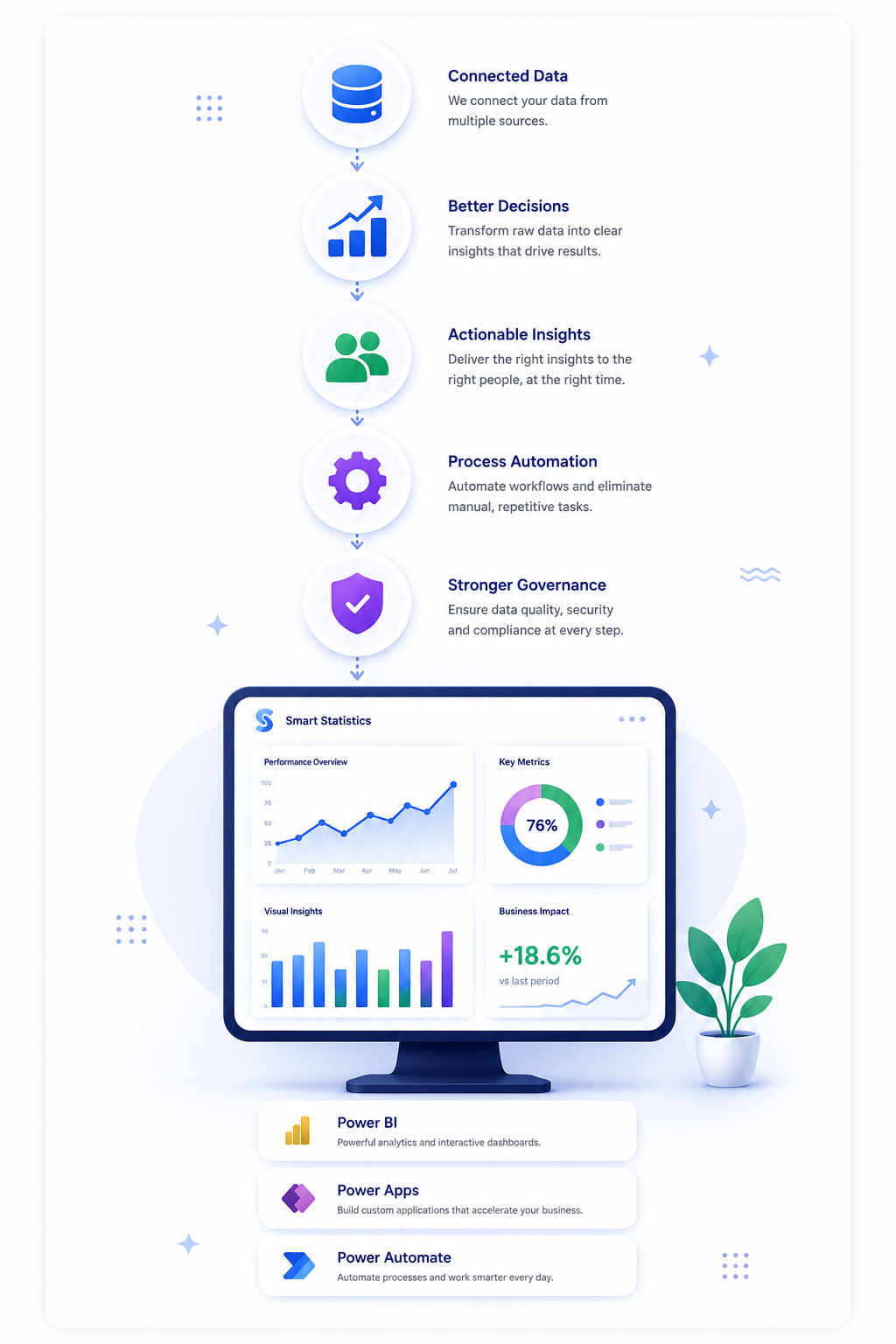
We help organisations define how data should be governed, managed and used to support better decisions, stronger operations and sustainable business growth.
Sequenced initiatives aligned to business value
Responsibility for definitions, quality and access is distributed across teams without clear accountability.
Different systems, reports and departments provide different answers to the same business question.
Technology and reporting initiatives are commissioned without an agreed long-term direction.
Data exists across the organisation but is difficult to use for decisions, improvement and growth.
A data strategy establishes how information will support the organisation’s priorities, decisions and operating model.
It creates a shared direction for governance, quality, platforms, reporting and analytics while recognising current capabilities, constraints and delivery capacity.
The strategy brings together the organisational, operational and technical capabilities needed to improve how data is managed and used.
Define the role data must play in supporting strategic priorities, customer outcomes and operational performance.
Establish practical ownership, decision rights, standards and accountability for important business data.
Identify critical information, define acceptable standards and introduce controls that improve trust.
Prioritise the reporting, metrics and analytical capabilities that will create the greatest business value.
Define how data should be sourced, integrated, stored and made available across the organisation.
Clarify the roles, skills and behaviours needed to manage data and use insight effectively.
A strategy must clarify how the organisation will manage data in practice, not simply describe future technology.
Named business accountability for definitions, quality, access and appropriate use.
Clear decision-making routes for standards, risks, priorities and cross-functional issues.
Shared terminology, rules and measures that improve consistency across systems and reports.
Roles and processes for delivering reporting, integration, data-quality and analytics improvements.
Proportionate controls for privacy, security, compliance and responsible use.
Prioritisation and benefits tracking that connects data investment to measurable outcomes.
We develop the strategy collaboratively, balancing long-term ambition with the organisation’s immediate needs and practical delivery capacity.
Confirm strategic objectives, operational priorities, decision needs and areas where data creates or limits value.
Review governance, quality, reporting, architecture, skills, ownership and delivery capability.
Agree the future capabilities, principles, responsibilities and operating model required.
Evaluate potential initiatives according to value, urgency, dependencies, risk and delivery effort.
Sequence actions into practical phases with ownership, outcomes and measurable indicators of progress.
The final strategy provides decision-makers with a shared view of the current position, target capabilities and practical actions required.
A structured view of current strengths, weaknesses, risks and capability gaps.
A clear statement of how data will support business goals and future decisions.
Recommended ownership, responsibilities, decision forums and standards.
Defined roles, capabilities and processes for managing and using data.
A portfolio of recommended actions evaluated against business value and feasibility.
Sequenced phases, dependencies, ownership and measures for tracking progress.
A practical data strategy helps the organisation make better choices, reduce fragmentation and build lasting capability.
Focus effort and investment on the data capabilities that matter most to the business.
Clarify who owns important data, standards, decisions and improvement actions.
Improve consistency, definitions and controls across business systems and reports.
Build the governance, skills and operating practices required for long-term improvement.
We combine strategic analysis, business intelligence experience and operational understanding to create strategies that organisations can implement.
We begin with business outcomes and decision needs rather than selecting technology before the direction is clear.
Recommendations are grounded in maturity evidence, stakeholder insight and current operational realities.
We translate strategic ambition into realistic initiatives, ownership, dependencies and delivery phases.
A data strategy defines how an organisation will manage and use data to support its business objectives. It typically covers governance, ownership, quality, architecture, reporting, analytics, skills and a roadmap for improvement.
A technology roadmap focuses primarily on platforms, systems and technical change. A data strategy is broader. It also addresses business outcomes, governance, ownership, quality, operating processes, skills and decision-making.
A data strategy is valuable when information is fragmented, reporting is inconsistent, ownership is unclear, major data investment is planned or the organisation wants to improve its analytical and decision-making capability.
Not necessarily. The strategy assesses how well current systems support the organisation’s requirements and identifies where improvement, integration, simplification or replacement may be justified.
Yes. Governance is usually a core part of the strategy because organisations need clear ownership, standards, decisions and controls to improve data quality and consistency.
The assessment may include stakeholder interviews, document reviews, reporting analysis, system and data-flow reviews, governance evaluation and examination of current roles, processes and controls.
Yes. We can support governance implementation, reporting and analytics initiatives, data-quality improvement, operating-model development and the delivery of prioritised roadmap actions.
Whether you need to improve governance, prioritise investment or create a long-term data roadmap, we can help you turn fragmented initiatives into a focused and practical strategy.